

In March 2026, the Home Secretary announced the biggest change in refugee protection in decades. Instead of being able to apply for settlement after five years, refugees are now forced to renew their status every two and a half years.
We have launched legal action against the government over changes to immigration rules that significantly reduce the period of leave (permission to stay) granted to refugees.
This is the biggest challenge to refugee protection in decades, and we need your support to win.
If you’re able to donate, or share with someone who you think could, we would be incredibly grateful.
What's the legal challenge?
We argue the changes are unlawful and will cause serious harm by increasing instability and undermining integration.
In a formal pre-action letter, we have raised concerns with the rushed introduction of this policy and outlines multiple grounds for judicial review, including claims that the government appears to have:
- Failed to make proper inquiries to gather relevant and material evidence;
- Inadequately assessed the impact on refugees, including children and other vulnerable groups;
- Inadequately assessed the impact on the asylum system; and
- Breached its public sector equality duty and obligations regarding child welfare.
This shift to temporary status is part of a wider package of reforms to the asylum system that will introduce a new ‘core protection’ system for people recognised as refugees. The government intends to bring in further reforms to settlement rules which will mean that recognised refugees and those with humanitarian protection may have to wait up 20 years – renewing this ‘core protection’ status up to eight times - before they can apply for indefinite leave to remain (also known as ‘permanent settlement’).
How will this affect refugees?
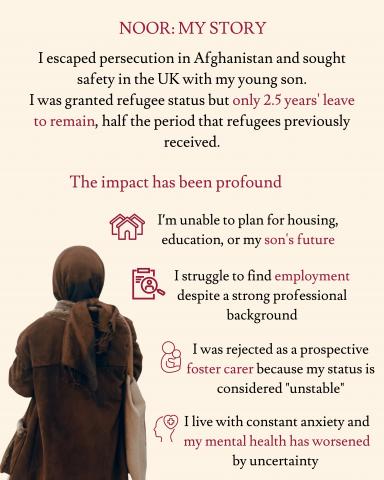
Refugees have often fled violence, persecution, torture, exploitation, or traumatic loss; a sense of stability is crucial for their subsequent recovery. Based on our in-depth work with people seeking protection, we know that the changes will leave refugees in prolonged uncertainty, making it harder to rebuild their lives. It highlights risks including reduced access to stable employment and housing, harm to mental health, particularly for survivors of torture, trafficking and trauma, and a longer, more complex route to settlement requiring repeated applications.
The policy will increase pressure on the asylum system by adding avoidable bureaucracy and delays, while exacerbating the hardships that are faced by refugees, including those from particular vulnerable groups, such as women, children and survivors of gender-based violence. It warns that prolonged instability could have lasting impacts on children’s education, wellbeing and development, and undermine community cohesion.
The Home Secretary has expressed her desire for the UK to be ‘in line’ with broader trends in Western Europe and has taken Denmark’s restrictive approach to refugee settlement as an example to follow. Yet, research has found that refugees in Denmark with temporary permits felt unable to build a future, with insecurity affecting every aspect of their lives.
What are we calling for?
We want the Home Secretary to reverse the changes and restore the five-year grant of leave.
Piya Muqit, Executive Director of Asylum Aid, said:
“The government’s stated objective in introducing this policy change is ‘to change perceptions of what the refugee offer is in the UK’ and ‘encourage those wishing to build a life in the UK to do so via legal routes and reduce the pull factors driving illegal migration’. But this deterrent approach to asylum reform has repeatedly proven itself to be a flawed strategy both in the UK and abroad, by failing to demonstrate any clear impact on the decision-making of those moving across borders to seek safety. By contrast, what these measures have done is profoundly undermine government objectives on refugee integration and social cohesion.
This policy risks trapping refugees in a cycle of insecurity, requiring people who have already fled persecution to repeatedly prove their right to safety. Reducing protection from five years to two and a half years makes it harder to rebuild lives, find stable work and contribute to communities. Refugees need certainty and dignity, not a system that keeps them in limbo. We are taking this action to ensure the UK asylum system remains fair, humane and lawful.”
Asylum Aid is grateful to be represented by Freshfields on a pro bono basis in this challenge